


Good Browser: Private Web
4,534.00 Arvustused
Rakenduse andmed
- Versioon
- 1.0.1
- Uuendatud
- Litsents
- Free
- Allalaadimised
- 100 000+
- Arendaja
- M.Seyam
- Kategooriad
- Äri
- Platvorm
- Android
Ekraanipildid
 Analüüsis AppCompare
Good Browser: Private Web on Android is the kind of app I would try when I want a straightforward way to browse and download files without turning my phone into a complicated workstation. I used it with that expectation: not as a complete replacement for every browser I already know, but as a focused tool for everyday web access. Its appeal is easy to understand, especially if you prefer a clean experience and want privacy to be part of the browsing habit rather than an afterthought.
The app belongs to the business category, although I see its practical value extending to ordinary personal use. Developer M.Seyam presents it as a fast private browser with search and downloads, while the short store description simply calls it “Good Browser”. That modest wording is useful because it sets a sensible expectation: this is an app to test through daily browsing, not a product I would choose based on a long list of promised extras.
After spending time with it, my main impression is that the quality of the experience depends heavily on the network around me. When the connection is stable, the browser feels most useful as a compact way to search, open pages and manage downloads. When the signal becomes weak or inconsistent, the value of any browser naturally narrows. Good Browser: Private Web does not change that basic reality, so the best way to judge it is by how comfortably it handles connected moments and how practical it remains when a page or download does not behave as expected.
How Good Browser: Private Web fits into everyday browsing
Kui kasutan Good Browser: Private Webi igapäevase sirvimise kõrval eraldi tööriistana, saan kiiremini aru, milliste ülesannete jaoks see mulle sobib ja milliste puhul eelistan tuttavamat brauserit. Järgmises osas vaatlen, kuidas üks tavaline otsing liigub lehe avamisest faili salvestamiseni ning millised väikesed valikud aitavad seda voogu sujuvamaks muuta.
Fast browsing starts with the connection
In my experience, a browser can feel fast for two different reasons. The app itself may respond quickly to taps, menus and navigation, while the websites still depend on mobile data or Wi-Fi. Good Browser: Private Web makes the first part feel central: opening the app, entering a search and moving between ordinary pages is the kind of workflow it is designed to support. The second part remains outside the browser’s control. A busy network, a distant server or a page full of heavy content can still slow everything down.
That distinction matters if you are choosing this app because of the word “fast”. I would interpret it as a promise of a direct browsing experience rather than a guarantee that every website loads instantly. On a reliable connection, the difference is pleasant because I can move from search to page to download without needing a separate app for each step. On a weak connection, patience is still required, particularly when a site tries to load several elements at once.
My most comfortable use case is a short, purposeful session. I might search for a document, open a page, inspect the available file and start a download. The browser’s value is clearest in that sequence because browsing and downloading belong to the same task. It is less convincing when I expect an extensive research workspace with many open pages, elaborate organization or advanced productivity tools.
Tasub enne valimist lugeda

Xiaomi ilmarakendus aitab päeva planeerida, kuid kogukonda ei loo

PLAYit leiab telefonist peaaegu iga video, kuid mugavusel on hind

TikTok Lite viib lühivideod väiksema andmekuluga kaugemale

Prime Video võit sõltub sellest, mida vaataja telefonis leiab

Moovit ei juhi busse, kuid mõjutab seda, kuidas linnas liigume
Nädala valik: Microsoft 365 Copilot aitab tööga kiiremini alustada
What private browsing means in practical use
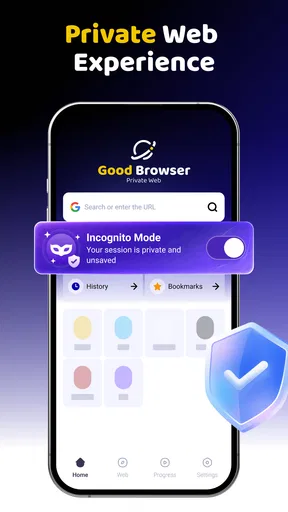
Privacy is part of the app’s identity, but I would not treat that word as a reason to stop thinking about ordinary browsing habits. A private browser can make the choice of tool feel more intentional, yet the websites I visit, the files I download and the networks I use still influence my overall exposure. I avoid entering sensitive information on unfamiliar pages simply because an app describes itself as private.
For me, the practical benefit is psychological as well as functional. Opening a browser built around private web use encourages me to separate casual searching from the browser I use for accounts and long-term routines. That separation can be useful on a shared phone or when I want a more limited browsing session. It is not a substitute for careful passwords, sensible downloads or checking that a page is genuine.
I also recommend being realistic about the word “private” when using public Wi-Fi. A browser may offer a privacy-focused experience, but connecting through an unknown network still deserves caution. I would avoid treating Good Browser: Private Web as a complete security shield. Its strongest role is as a privacy-minded browsing option, not as permission to ignore the normal risks of the web.
Downloads are useful, but they deserve a workflow
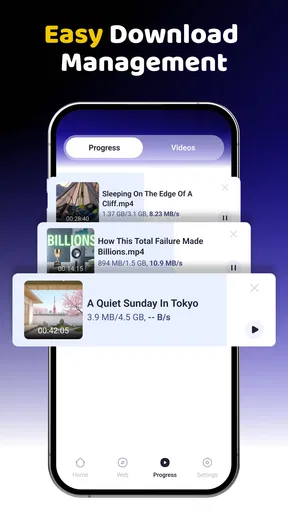
The download function is one of the reasons I find this app more practical than a browser that only serves pages. A realistic example is receiving a document through a web page while travelling between appointments. I can search for the source, open it and begin the download from the same place instead of copying the address into another tool.
My advice is to begin downloads only after checking the file name and the page address carefully. This is a small habit, but it prevents the browser’s convenience from becoming a source of clutter or risk. I also prefer starting larger downloads when the connection is stable and the phone has enough battery, because a browser cannot repair a network that repeatedly disappears.
A less obvious trade-off is that downloads make connectivity more important than normal reading. A page may eventually appear over a poor connection, but a file transfer can stall at the worst moment. If the file is important, I would wait for dependable Wi-Fi or a strong mobile signal rather than repeatedly pressing the download control. That approach saves data and avoids creating several incomplete or duplicate attempts.
Using it on a phone rather than at a desk
Good Browser: Private Web makes the most sense in mobile situations where I need a quick answer or a file while away from a computer. I can imagine using it at a bus stop to check a service page, during a work break to find a form, or at home when I want a separate browser for a one-off search. The smaller screen changes how I judge it: clear movement between search, page and download matters more to me than elaborate desktop-style features.
On a phone, network changes happen often. I may begin on Wi-Fi, walk outside and continue on mobile data, or move through an area where the signal fades for a moment. Those transitions are where I pay attention to whether the current page remains understandable and whether an interrupted action is easy to try again. I would not plan an important task around a connection that is already unstable, but the browser is suitable for ordinary connected use.
There is also a data-conscious angle. Text searches and simple pages are usually easier on a limited plan than media-heavy sites, but the browser cannot decide whether every page is economical. I therefore use it with the same discipline I would apply elsewhere: I avoid opening unnecessary tabs, check what I am about to download and postpone large files when my data allowance is tight.
When a page or download fails
Every mobile browser eventually encounters a page that refuses to load, a connection that times out or a download that stops. The important question is not whether failure exists, but whether recovery feels understandable. My recovery routine with Good Browser: Private Web is simple: I check the connection first, wait briefly, retry once and then reconsider the page or source if the problem continues.
That order is more useful than repeatedly tapping refresh. If other apps are also struggling, the browser is probably not the cause. If only one page fails while other sites work, I look at the page itself or try a fresh search for the same information. This is a concrete advantage of keeping expectations modest: I can distinguish a browser problem from a website problem instead of assuming that every delay requires reinstalling the app.
Downloads need a slightly different response. When a file does not arrive, I check whether the connection changed and whether I accidentally left the download in a poor-signal area. I also avoid starting several copies at once. If a download is time-sensitive, I would use a more established browser or a dedicated download workflow that I already trust, especially when I need clearer control over a large transfer.
The friction I notice is that a focused browser may feel limited when something goes wrong beyond a basic retry. Users who expect sophisticated download queues, detailed transfer controls or extensive recovery tools may find the experience too simple. That is not necessarily a flaw for short tasks, but it is a boundary worth understanding before making it the only browser on a phone.
Small habits that make connected use better
I found three habits particularly useful. First, I search with a specific phrase instead of repeatedly loading a broad page. That reduces unnecessary back-and-forth when the connection is slow. Second, I open the target page before beginning a download, so I can check that the file is actually the one I need. Third, I postpone non-urgent downloads when the network is switching between Wi-Fi and mobile data.
Another practical habit is to treat the browser as a task tool rather than leaving it open while I do unrelated things. A short session is easier to understand and less likely to consume data through pages I forgot about. If I am researching a purchase or work topic, I note the useful information as I go instead of assuming that keeping every page available will be the most efficient approach.
These habits are not hidden buttons or secret settings. They are ways of working that suit this particular app’s emphasis on direct browsing and downloads. The browser helps most when I give it a clear job. It becomes less attractive when I ask it to serve as a full research archive, a complex file manager and a universal privacy solution at the same time.
Who should use it and who should choose another option
I would recommend Good Browser: Private Web to someone who wants a free, uncomplicated browser for searches and occasional downloads, especially if privacy is an important preference. It is also a reasonable secondary browser for separating quick web tasks from a primary browser filled with saved accounts and long-term browsing history. The age rating is PEGI 3, so its intended audience is broad from an age-classification perspective.
I would be more cautious about recommending it as the only browser for someone who depends on advanced synchronization, extensive tab management, complex desktop websites or highly detailed download controls. In those cases, a mature mainstream browser may be the better choice because familiarity and ecosystem support can matter more than having a separate private browsing option.
It may also be the wrong fit for people who mainly browse offline. The experience is built around visiting web pages and downloading content, so its usefulness naturally depends on having a working connection. I would not install it expecting it to turn previously unseen websites into offline material. For connected searches and deliberate file retrieval, it makes more sense.
Version, cost and overall confidence
The app is free, which lowers the risk of trying it as a secondary option. It is currently at version 1.0.1, and that makes me view it as a focused product whose everyday reliability matters more than a long feature checklist. I judge it by whether it gets me from search to useful page to completed download without unnecessary complexity.
Its average rating is 4.5 from around one thousand ratings, and it has received several dozen written reviews. More than one hundred thousand people have installed it, so it is not an unknown experiment with no audience. Those figures give me some confidence that the basic idea is useful to many people, while my own recommendation remains conditional on what you expect from a browser.
The developer is M.Seyam, and the app is available at no cost. I would still make the first session a trial rather than immediately moving every browsing habit into it. Search for a few ordinary topics, open the kinds of pages you use most and test a small, non-essential download. That gives you a better answer than any rating about whether its response and layout suit your phone and network.
My final view on connectivity
Good Browser: Private Web works best when I see it as a compact, privacy-oriented gateway to connected web tasks. Its strengths are the direct combination of searching and downloading, the simple mobile purpose and the fact that I can try it for free. It is particularly comfortable for quick searches, one-off pages and files that I can verify before saving.
Its limitations become clearer when the network is poor or when I expect the depth of a long-established browser. No browser can make a weak signal reliable, and this app should not be treated as an offline solution or a complete answer to every privacy concern. I also would not choose it first for elaborate tab workflows or demanding download management.
My verdict is simple: choose Good Browser: Private Web if you want a focused free browser for connected searching and careful downloads, but keep your expectations aligned with that purpose. I would recommend giving it a practical test on both Wi-Fi and mobile data, paying attention to how it behaves when a page loads slowly or a download needs a retry. If that everyday rhythm feels comfortable, it can be a useful addition to your phone. If you need a full-featured browser ecosystem, a more established alternative will probably serve you better.
Plussid
- Lihtne ja selge kasutajaliides sobib ka vähem kogenud kasutajatele.
- Privaatsusele keskenduv ülesehitus vähendab jälgimisega seotud muresid.
- Rakendus käivitub kiiresti ja võimaldab veebilehti mugavalt avada.
- Järjehoidjate salvestamine aitab sageli külastatud lehtedele kiiresti ligi pääseda.
- Sobib kasutajatele
- kes soovivad eraldi privaatset veebisirvimise rakendust.
Miinused
- Privaatsusfunktsioonid ei asenda täielikult VPN-i ega anonüümset internetiühendust.
- Mõned veebilehed võivad privaatsusseadete tõttu töötada piiratud kujul.
- Rakendus võib sisaldada reklaame või tasulisi lisafunktsioone.
- Täiustatud brauserite laienduste ja kohanduste valik võib olla piiratud.
- Tundlike andmete sisestamisel tuleb siiski kontrollida veebilehe turvalisust.
Korduma kippuvad küsimused: Good Browser: Private Web
Mis on Good Browser: Private Web ja milleks seda kasutada saab?
Good Browser: Private Web on privaatsusele keskenduv veebibrauser, millega saab külastada veebilehti, teha otsinguid ja hallata sirvimist tavapärasest diskreetsemalt. Rakendus on mõeldud kasutajatele, kes soovivad vähendada jälitamist, piirata reklaamide või küpsiste mõju ning hoida sirvimisega seotud andmed paremini enda kontrolli all. Enne kasutamist tasub siiski tutvuda rakenduse privaatsuspoliitikaga.
Kas Good Browser: Private Web muudab internetis sirvimise täielikult anonüümseks?
Ei, ükski tavaline brauser ei taga täielikku anonüümsust. Good Browser: Private Web võib pakkuda privaatsemaid sirvimisfunktsioone, näiteks väiksemat jälitamist või sirvimisandmete automaatset piiramist, kuid veebisaidid, internetiteenuse pakkuja ja kasutatavad kontod võivad siiski teatud teavet näha. Anonüümsuse suurendamiseks tuleb lisaks pöörata tähelepanu lubadele, küpsistele, sisselogimistele ja seadme turvalisusele.
Kas rakendus blokeerib reklaame ja jälgijaid automaatselt?
Privaatsusbrauserid sisaldavad sageli reklaamide, küpsiste või jälgimisskriptide piiramise võimalusi, kuid nende tegelik toimivus võib veebilehtede ja rakenduse versiooni järgi erineda. Mõni sait võib laadida aeglasemalt, kuvada hoiatusi või nõuda teatud kaitsete väljalülitamist. Seetõttu ei tasu eeldada, et kogu reklaam või jälgimine kaob automaatselt; kontrollige rakenduse seadeid ja lubage erandeid ainult usaldusväärsetele lehtedele.
Kas Good Browser: Private Web on tasuta ning kas selles võib olla rakendusesiseseid oste?
Rakenduse allalaadimine võib olla tasuta, kuid saadaval võivad olla reklaamid, tasulised lisafunktsioonid või tellimusmudel, sõltuvalt kasutatavast platvormist ja rakenduse versioonist. Enne allalaadimist kontrollige Google Play või App Store'i lehel hinnastamist, tellimuste tingimusi ja automaatse uuendamise reegleid. Kui rakendus pakub prooviperioodi, lugege kindlasti, millal tasuline periood algab ja kuidas tellimus lõpetada.
Kas Good Browser: Private Web sobib igapäevaseks kasutamiseks ja kas see toetab kõiki veebilehti?
Rakendus võib sobida igapäevaseks sirvimiseks, eriti kui hindate lihtsat kasutuskogemust ja privaatsusele suunatud seadeid. Siiski võivad mõned veebilehed, videoteenused, pangaportaalid või sisselogimist nõudvad teenused vajada küpsiseid, JavaScripti või jälgimistehnoloogiaid, mida privaatsusfunktsioonid piiravad. Enne peamise brauserina kasutamist tasub testida oma tavapäraseid veebilehti ning hoida vajadusel varubrauser oluliste teenuste jaoks.


